

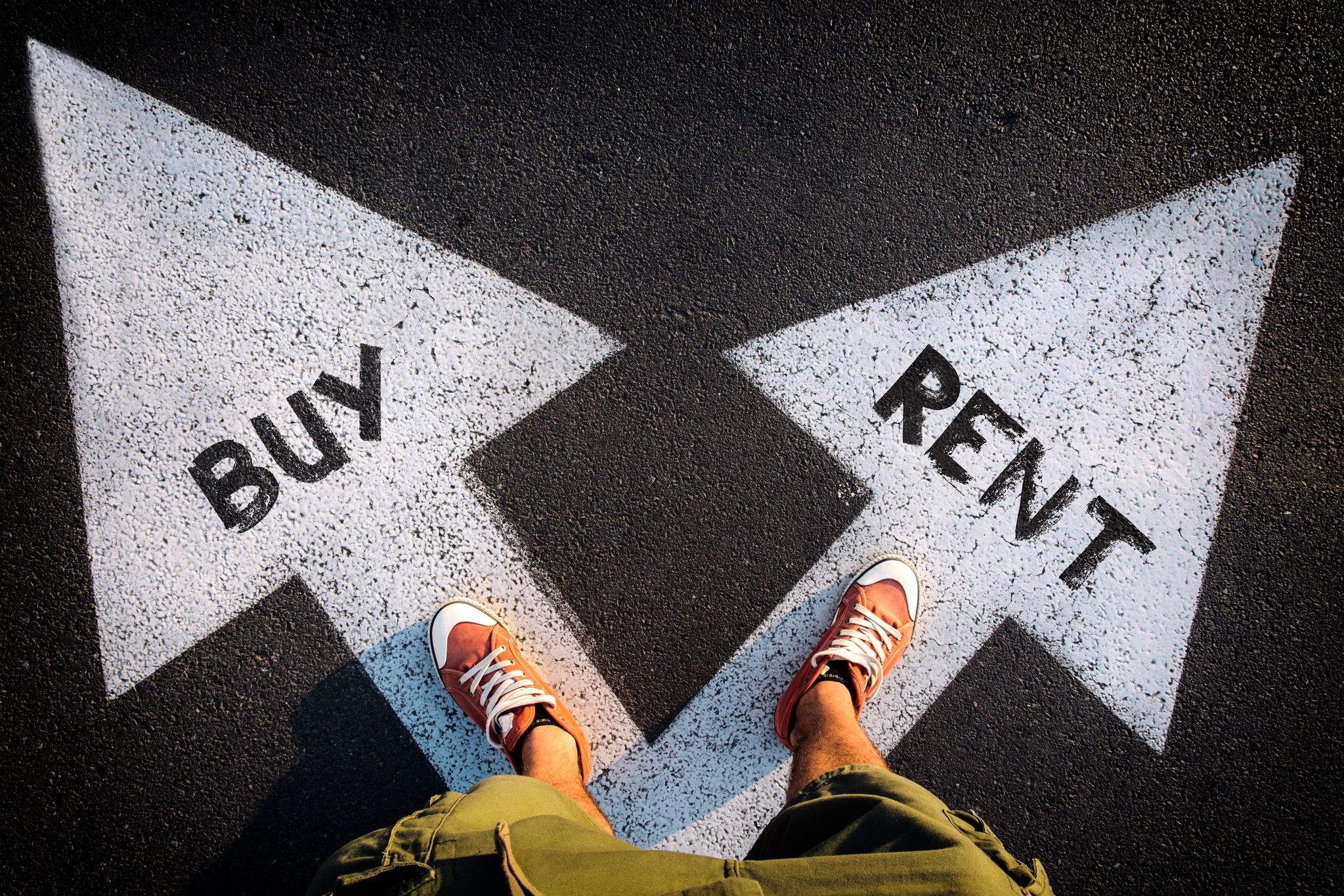
While most of us are looking to eventually have a permanent home, it’s not easy to decide when to buy one. Buying a home can be quite the commitment, making renting one an easier decision to make. However, each option comes with its own set of pros and cons. To make such a decision, we need to ask ourselves a bunch of questions. We also need to look into our options for both and how they would affect our lives.
We’ll take a deep into the factors that would affect your decision. Whether it’s your income, family situation, or location, this article will be focused on helping you make a more educated decision. We’ll also add in a few federal assistance programs that could help you out with rent, down payment, and mortgage.
Let’s Start With The Questions You Should Ask Yourself
Some of these questions might come off as obvious to you. If and when we think about these ideas from the long-term perspective, they can change how we make our decisions. So when you’re deciding on whether you should rent or buy your next home, take the time to consider your answers carefully.
How Long Do You Plan On Staying In Your Next Home?
This thought doesn’t occur to many people when they’re renting their homes. However, when buying a home, people will always consider keeping that home for at least 5-10 years. It’s not just about keeping the place, but also the investment of time, money and effort that you’ll put into your new home. Before we discuss these main factors, let’s look at the smaller stuff.
Customizing Your Home The Way You Want It To Be
If we plan on staying in a place for a long time, we’ll probably want to shape it to the way we like it. The problem with renting a place is that it’s not yours after all. That means you may not be able to make big changes, like changing the paint or re-structuring it. Furthermore, if you don’t plan on staying in a place for long, you’ll probably feel discouraged from buying stuff for it.
Let’s Talk About The Financial Part
On the financial side of things, it’s all about what you’ll end up with eventually. If you don’t plan on staying for long, there’s no point in putting yourself in long-term debt. So, renting a place for a year or 2 makes perfect sense if you plan on moving out eventually. But if you plan on staying in a place for a long time, that’s a different deal. See, it’s all about what happens when you’re done paying. When you’re done paying your rent, you end up with nothing. However, when you’re done paying your mortgage on a home, you end up with much more. A home that you buy is not only a ‘home’ but also a big financial asset. That financial asset can increase in value, whether you choose to keep it or sell it.
On the other hand, buying a house costs a lot more. Sure, renting a place can come with security deposits and other fees, but that’s manageable compared to down payments and mortgages. When you’re buying a new place, you’re probably going to pay somewhere 3-10% of its value upfront. So, let’s say you’re buying a place for $100,000, you’ll be expected to cough up $3,000-10,000 before starting to pay off the rest through a mortgage. This brings us to our next point, your income and budget.
How Much Is Your Income? Do You Have Savings? How Much Of It Can You Invest In Housing?
From a practical perspective, it’s pretty much a numbers game. Buying a house costs a lot more in general. Besides down payment and mortgage, you’ll have to deal with other fees. These fees will include insurance, renovation, and more. Renting a place is usually pretty straightforward. In most cases, you’ll need to pay a security deposit and monthly rent, that’s about it.
So, if you are living paycheck to paycheck, with little to no savings, renting makes more sense. The main reason is that you shouldn’t put yourself through extreme financial stress for years, just to buy a place. You should take that step when you’re capable of living a somewhat comfortable life while sparing a part of your money.
On the other side of things, if you manage to save up money every month, perhaps buying a house is for you. Saving big sums of money in a bank account while renting your place doesn’t really make sense. To put things into perspective, on average, the interest rate you’ll receive from a savings account is 0.06% annually. This means if you have $10,000 in your account, you’ll receive $6 in interest, per year. In comparison, the real estate market in 2021 shot up by 19%. So if you bought a house at the beginning of 2021 for $100,000, it’s now worth $119,000.
Are You Willing To Invest The Time Needed For Buying A New Home?
Initially, there’s the obvious time needed to look for the perfect home for you. Between talking to real estate agents, visiting houses, and preparing the necessary paperwork, things take time. Let’s say you bought your new home and got the keys for it. Things don’t just stop there. You now need to prepare the house to become a home. There’s furniture, decoration, setting up your utilities like water, electricity, and internet access. Moreover, there’s maintenance, which only requires more time in the long run.
In contrast, renting a place is pretty much cookie-cutter. Preparing the place for living is a landlord’s responsibility. Maintenance is usually also on the landlord unless it was due to a mistake of your own. It takes a serious time investment to have a place that you’ll truly call yours.
What Are Other Perks of Renting or Buying?
The thing about renting is that it provides you with the flexibility to change whenever. If you’re renting a small place now, you might make more money later and move to a bigger place. You also don’t have to worry about the place you’re renting once you leave it. Renting also makes it easier to relocate to other parts of the city, or even to go to different cities. As we mentioned, rental places are often ready for immediate accommodation, which means you can easily browse different options, without having to imagine what it can look like after time or money investments.
Buying a home, on the other hand, comes with a wide range of advantages. We already discussed the ability to make your home the way you’d like it to be. We also talked about buying a home as a financial investment. However, there are other perks that you might not consider right away. First, owning a home makes you more financially qualified to receive certain benefits, such as bank loans, as you can use your home as collateral for a loan. Second, if you buy a place, you may rent out unneeded spaces for extra income.
Can The Government Help Me Buy Or Rent My Next Home?
As we’ve discussed, buying or renting a place is not exactly cheap. According to research, a shocking number of Americans are struggling to afford to rent one-bedroom apartments, even with 40-hour work week jobs. Adding a global pandemic to the mix, there’s a huge increase in unemployment. It’s safe to say that rent is becoming more and more difficult to afford.
Thankfully, there’s a wide range of federal housing assistance opportunities that you can benefit from. These programs can help you buy a new place or even rent a place without going completely broke. Federal housing assistance programs can come in the form of loans, grants, and affordable house rental solutions. We’ll discuss a few of your options here, but for more information, we highly recommend you check out Benefits.gov.
Let’s Start With Government-Supported Affordable Rental Options
These housing assistance opportunities are generally reserved for low-income individuals and families. The idea is to help these folks live in a safe and stable environment, avoiding the threat of homelessness or unfavorable living circumstances.
Public Housing
This option is well-known among low-income families. To put it simply, public housing is government-subsidized housing for low-income families. That means the government built several housing projects to provide cheap/affordable housing for low-income American families. To qualify for this kind of housing, applicants need to be US citizens or eligible immigrants. Applicants preferably should also not have prior criminal records. To learn more about public housing, drop by your nearest Public Housing Authority (PHA) and inquire about it.
Housing Choice Vouchers (HCV)
You may find this program also under the name Section 8 Housing. HCV is such an interesting program. Not only does it provide house rental assistance, but also the flexibility to choose the home that fits the family best. However, the owner of those homes must accept these vouchers as a form of payment. Just like with public housing, you can learn more about Housing Choice Vouchers through your local PHA. But, here’s a little summary of the program. HCVs are meant to help low-income families pay less for rent, enabling them to save money for other necessities. On average, families, through this program, only have to pay 30% of their income towards rent, and the rest would be covered by those vouchers.
How Can The Government Help Me Buy A Home?
We already agreed that buying a home is not cheap. The expenses start with down payments and closing costs, then go on with mortgages and perhaps moreover with maintenance. Luckily, the federal government created separate housing assistance programs to help out with all 3 expenses.
Chenoa Fund
This program was created to help families pay off the first chunk of a house’s price. This fund can help you out with up to 3.5% of the house’s price. This can be ideal for people buying houses that ask for 3.5% down payments.
Loans
There’s a long list of federal loan programs meant for housing assistance. You should definitely visit Benefits.gov to learn about all housing loans you qualify for. In the meantime, you should check out these federal housing assistance loans:
Federal Housing Administration loans are government-insured loans. When buying a home, borrowers can buy new homes with down payments as low as 3.5%.
US Department of Agriculture loans are for those planning on living in rural areas. For eligible applicants, loans can be provided for down payments as low as 0%.
Veteran Affairs loans are a way to show appreciation to our servicemen and women. It’s a lifetime benefit. That means eligible applicants can make use of the program at any point in their lives. Funds through this type of loan can be used for buying, building, repairing, retaining, or adapting a service member’s home. Although these loans are financed through private organizations, like banks, VA itself requires no down payment. VA will also charge very low-interest rates.
Conclusion
There’s a lot of thought that goes into choosing our homes. Deciding between renting a place or buying one can be exhausting. But, if you look at things practically, asking yourself constructive questions, can make things a bit easier. You should also consider all the factors we mentioned above before making that decision, as they will seriously affect your experience in your new home.
Don’t forget that the government’s here to help you out. There are federal housing assistance programs to help all sorts of people, in different situations. Whether you’re looking for a cheap place to rent or a way to afford your down payment or even a way to afford a mortgage, there’s probably a federal program out there to help you out. So take your time before you make any big decisions and do proper research regarding all opportunities that might make it easier for you to get the better option.